Understanding the Civil Right's Movement Through Richard Wright's "Down by the Riverside"
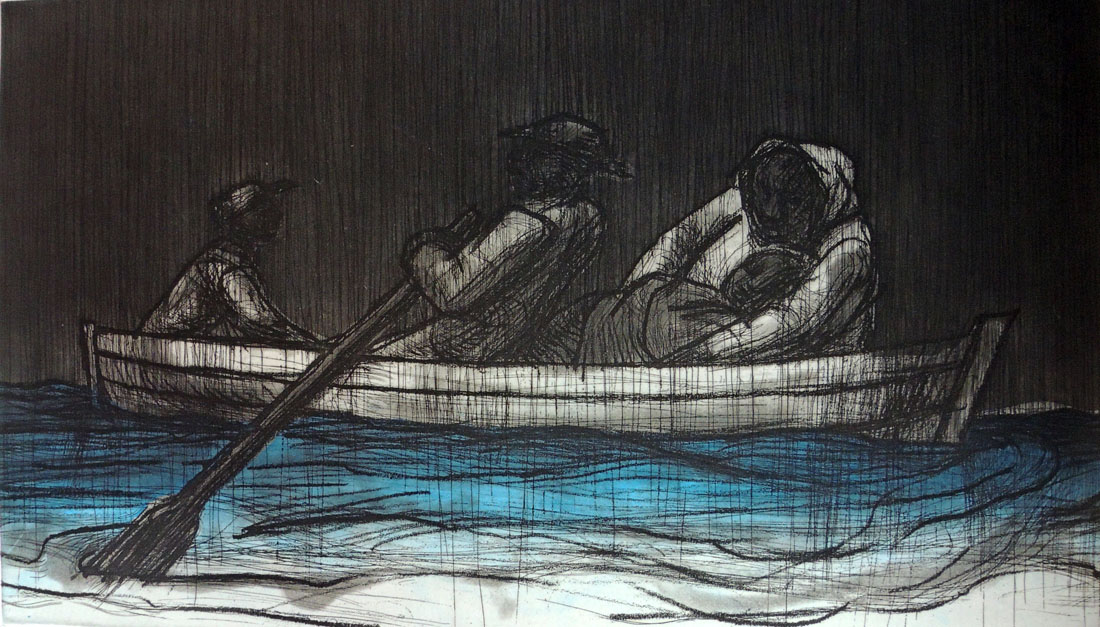
I believe Richard Wright’s “Down by the Riverside” vehemently supports the change brought by the civil rights movement, but asserts that there is still a lot that needs to be done, specifically in terms of economic and resource equality. The whole short story focuses on depicting the most vivid, gruesome, but very possible life of a Black man living in Jim Crow South during the Great Mississippi Flood of 1927. The story doesn’t hold back on providing the reader with the pure terror and hopelessness filling the everyday life of a Black person in America. The main character, Mann, is forced to make difficult decisions to fulfill his family’s rights to basic human necessities. A really good way Wright brings about this urgency for change in the Jim Crow South is Mann’s naivety about the true extent of the pure evil of racist white people. He shows that any optimism or desire to believe things are any better than they are is just enabling the constant cycle of oppression.
Mann’s innocence when it comes to the lengths the southern white people will go to hate and undermine black people makes the violence of Jim Crow so much more powerful and hurtful. Mann and his family desperately need the resources used almost exclusively by white people. His innocence is shown most notably at the beginning of the story, with this internal monologue, lamenting about the horrible predicament he is in. His pregnant wife, Lulu, is in need of a doctor, but needs a boat to access the hospital due to the rising waters of the Mississippi River: “Lulu could not last much longer this way. [...] The white folks would take her in. They would have to take her in. They would not let a woman die just because she was black; they would not let a baby kill a woman. They would not.” These thoughts of optimism are later crushed throughout the story. Everywhere Mann and his family went, they were met with the highest form of discrimination. From the deprivation of essential resources, to always being referred to with condescending words such as the N-word and “boy,” to the commandeering of Mann’s boat and the separation from his family, the magnitude of sub-human treatment hits the reader hard because of Mann’s initial hopefulness for simple human kindness. The optimism is crushed innumerable times throughout the story
As Mann does involuntary emergency rescue labor, he is forced to save the remaining Heartfields from a flooded house (the white family that saw that Mann had their boat, leading to the death of Mr. Heartfield). He is terrified of the thought of them identifying him as Mr. Heartfields killer, and considers killing them to tie off any loose ends: “Yes, now, if he could swing that axe they would never tell on him and the black waters of the flood would cover them forever and he could tell [his partner] he had not been able to find them and the whites would never know he had killed a white man.” Mann is morally deliberating killing again for self-preservation. I argue that this hesitation reflects his prevailing naivety about the evilness of the Jim Crow South. Letting the family live, as gruesome as it may sound, was his death sentence, but I believe Mann still held on to a shred of hope that his good deeds would earn their silence, that they would understand how messed up the whole situation was, where black people have to steal boats to properly treat their already dead pregnant wife. Despite everything he had been through, he still counts on the broken, non-existent standards of racist white people. He doesn’t realize how grave his situation is until his end comes near.
The Heartfields report Mann to the authorities, leading to his tragic end. Wright communicates something powerful in Mann’s death. His pure belief that there was some good left in the Jim Crow South was crushed repeatedly. He did everything he could to protect his family while also appeasing the white people, only to come to a pitiful demise. I believe that Wright argues that the needs of Black people are completely incompatible with the current Jim Crow system. The story shows a virtuous, optimistic man killed as a consequence of his love for his family being at odds with the resource deprivation. Wright argues that optimism, as Mann conceives it, is impossible. He argues that change needs to come now, before more families are torn apart and more people face violence and death for trying to live passively under the oppressive society. I think that Wright believes that pragmatism is the only possible mentality that will achieve equal rights for white and black people. He believes that black people should no longer be forced or encouraged to passively live under the influence of Jim Crow. The story exemplifies this argument by directly showing how racial segregation is a system that refuses to allow black people to live a healthy, happy life, let alone flourish in any other aspect.


Hi Robenas,
ReplyDeleteSeeing how the story frames Mann as innocent makes the case against Jim Crow society far stronger, and I like how you explored that here. Mann being naive about White cruelty, amidst all that happens, strikes the reader and evokes tremendous sympathy for him (much more than had he been framed as overly proud or arrogant). The fact that his good deeds end up coming back to bite him is one of the many knock-out punches that Wright delivers in this story to put heavy emphasis on how wretched this society really is.
Hi Robenas, I was initially surprised of your characterization of the short story as evidence of the changes of the civil rights movement. However, reading further, I was able to see your reasoning for this. I also really liked your emphasis of how Mann's glimmer of hope in the white society was repeatedly crushed throughout the story. Thank you for a great blog!
ReplyDeleteHi Robenas, I like how you connected Manns story to the overall battles of Jim Crow, and how this makes his situation much stronger. Manns acts and deeds meaning to be good came back to impact him in negative ways at times, and I think that sticks to your point that his situation makes the relation to Jim Crow stronger. Nice job!
ReplyDeleteHi Robenas, I think you brought out a lot of the striking parts of the story in your blog. I like how you used the train of thought of Mann when he was bringing Lulu to the hospital to show how the black people were hopeful that the white people would help them, but in the end they didn't recieve the help they deserved. I think overall this kind of story ended up making many people understand the hardships of the black people which helped spark the civil rights movement. Good job!
ReplyDeleteHello dearest Robenas, I saw "Down by the Riverside" as a story showing the change that still needs to happen. After emancipation, the black people are still being treated like slaves, which is seen with the mandatory labor imposed upon black men during the flood. I found your statement of Mann and his spirit being crushed by Jim Crow as a powerful interpretation of this reading.
ReplyDeleteHi Robenas!
ReplyDeleteI'd never thought about optimism in this story before, and I think you do a great job of showing how Wright utilized Mann's optimism to argue for against racism and segregation. I think the use of Mann as an innocent, hopeful figurehead really helps solidify white supremacy as the ultimate evil. Wright does a great job of juxtaposing good (Mann) with evil (white people), and you do a great job of explaining it!
Hello Robenas, I found it interesting how you highlighted the idea of nativity in Mann surrounding the white people that were racist toward him. Mann maintains this hope that he would be treated better in society if he were to do good deeds, but Mann was never offered that treatment. I agree that his actions eventually ended up backfiring, further stressing the realities of Jim Crow. Nice job!
ReplyDeleteRobenas, I liked how you analyzed "Down by the Riverside" through the lens of how far the civil rights movement instead of focusing on the black naturalism element. I definitely agree with the points you made about Mann's belief in the inherent good in humanity being crushed, and how this relates to the efforts of the civil rights movement being crushed repeatedly. I also think that Wright was able to use the crisis of the flood to further show off how disadvantaged the black people in the Mississippi Delta are, and how the white people had the resources to help more people, but ended up not using them due to the racism prevalent in the Jim Crow south at the time. I think Wright's message of support for the Civil Rights Movement is more subtle than some of the other messages we have read in class, but you did a great job at analyzing it!
ReplyDelete